Seventeen lessons, ready to teach
One lesson for each stretch of the chart, in the order of the book. Each runs about forty-five minutes and works for a Sunday School class, a home group, a homeschool morning or a family table. Read it the evening before with the book open at the spread, and teach it as it stands.
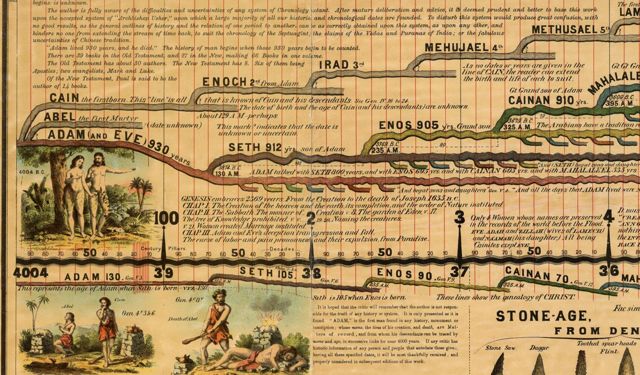
Where Adam’s Years Begin to Count
By the end of the lesson the class can read any dated birth on pp. 16–17 both ways, in A.M. and in B.C., and explain why Seth’s line carries years when Cain’s does not.
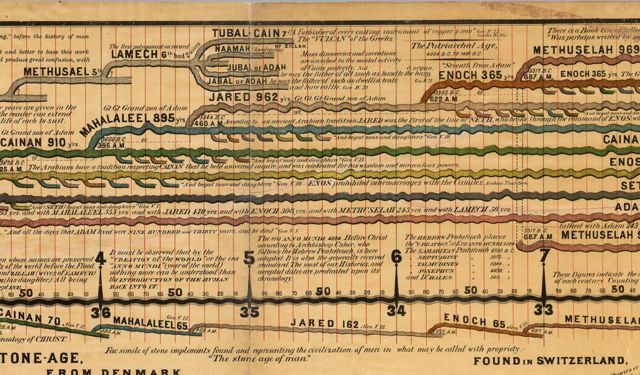
A Ribbon for Every Life
By the end of the lesson the class can read a ribbon as one man’s life and use a single column to name everyone alive in a given year.
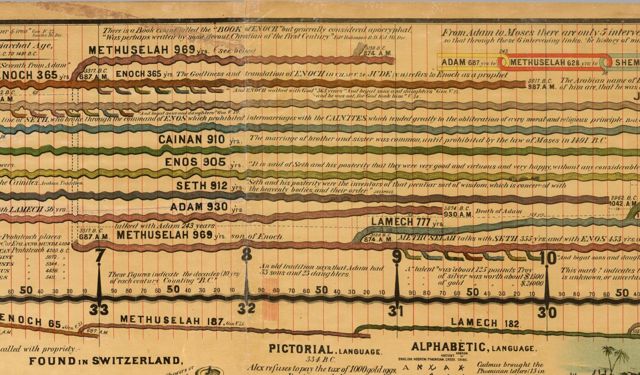
The Ribbon That Ends Without Death
By the end of the lesson the class can explain why Enoch’s ribbon ends without a word of death, and can tell a line of Scripture from a tradition Adams prints beside it.
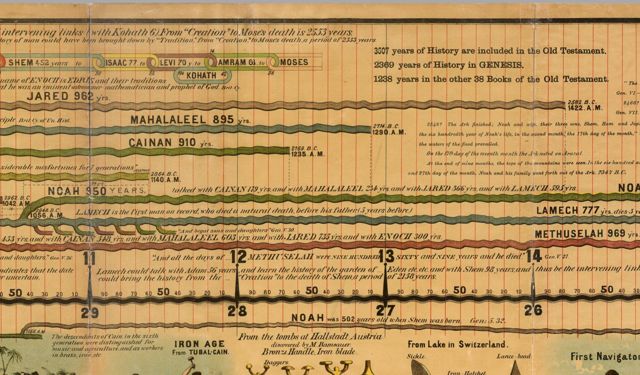
The Chain of Long Lives
By the end of the lesson the class can follow the older ribbons as they end, find Noah’s birth, and explain how the memory of Eden reached Noah through a few long lives.
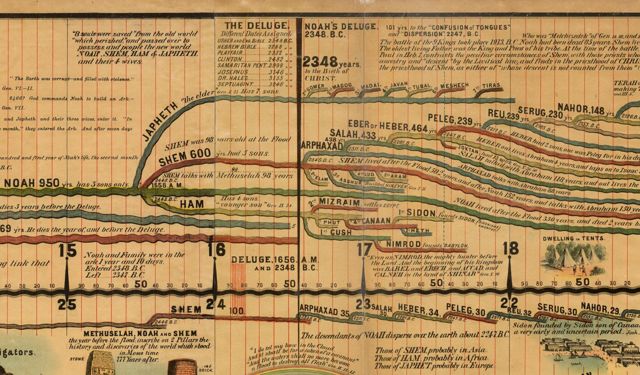
Eight Souls, Three Sons, Every Nation
By the end of the lesson your class will be able to find the Flood and the scattering at Babel on the chart and explain, in their own words, how one family became the nations of Genesis 10.
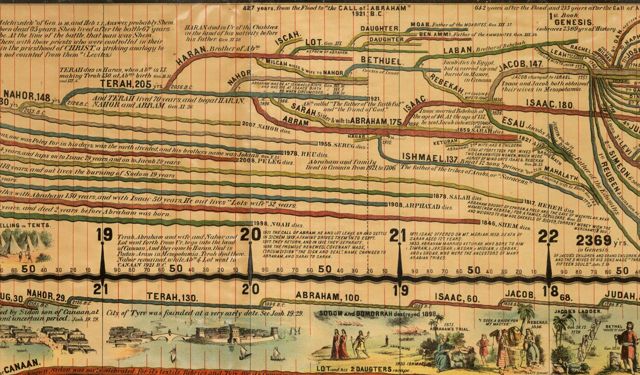
One Household Chosen for Every Family
By the end of the lesson your class will be able to follow Abraham’s family on the chart from Terah to Jacob and explain why the story narrows to one line at each step.
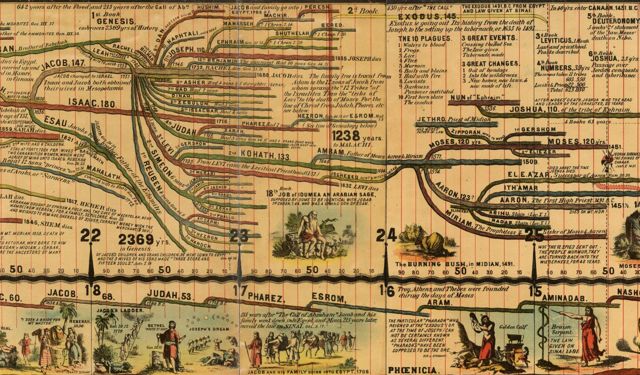
A Family Goes Down, a Nation Comes Out
By the end of the lesson your class will be able to trace Israel on the chart from Joseph’s dream to the edge of Canaan and explain how Adams fits the 430 years of Exodus 12:40 into it.
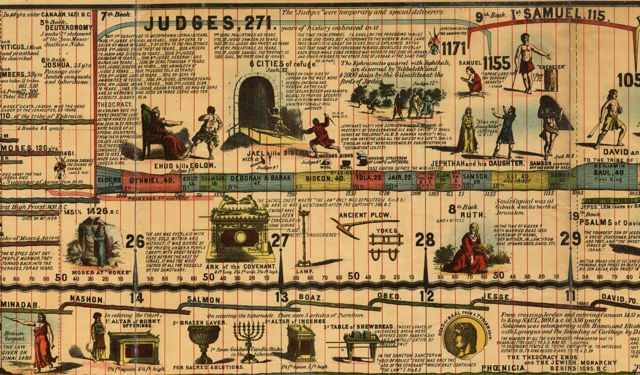
When God Was Israel’s King
By the end of the lesson your class will be able to read the judges’ band block by block, tell the cycle of the Book of Judges from it, and say when and why the Theocracy ends on the chart.
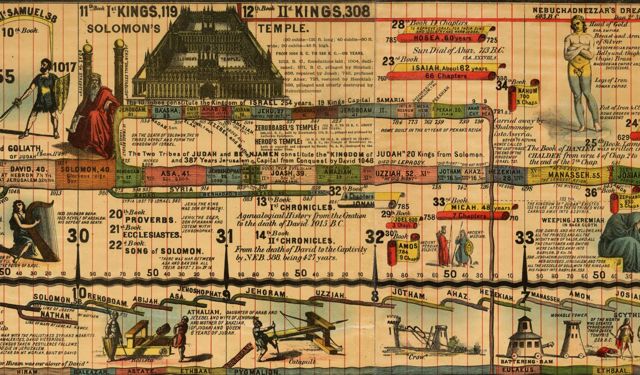
One Throne That Held, One Kingdom That Broke
By the end of the lesson your class will be able to follow David and Solomon’s single stream into the two rows of Israel and Judah, point to the split at 975 and the fall at 721, and name the key Adams uses for each.
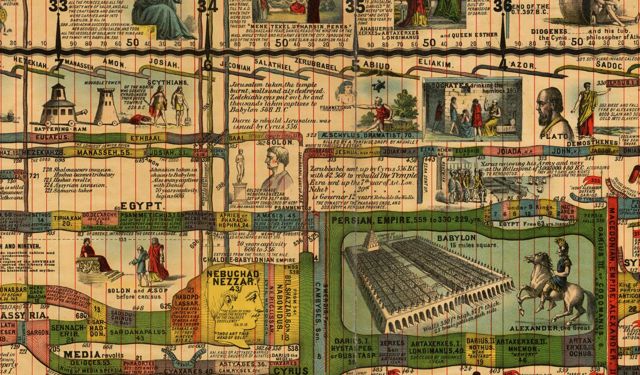
Carried to Babylon, Brought Home Again
By the end of the lesson your class will be able to trace Judah’s band into Babylon’s stream and back out again, name Assyria, Babylon and Persia in the order they rule, and show the seventy years from 606 to 536 on the chart.
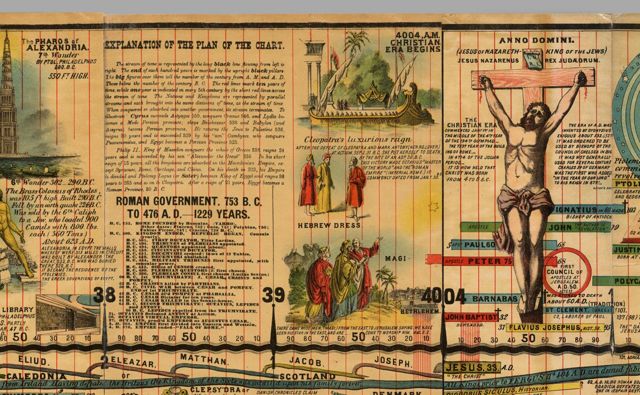
The Pillar Where the Count Turns
By the end of the lesson your class will be able to find the pillar where Adams turns the count of years, say where he draws the cross and where he writes the year A.D. 33, and follow the line from Adam to its last name.
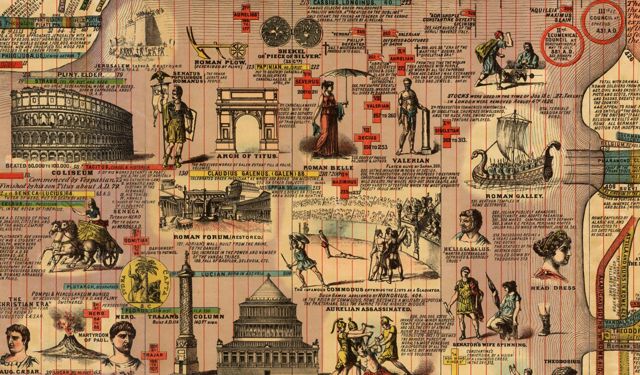
Ten Red Crosses and One of Gold
By the end of the lesson your class will be able to count the ten persecutions on Adams’ chart, name the emperor of the first and of the last, and use Key 6 to show that the last persecution and Constantine’s cross stand in one column.
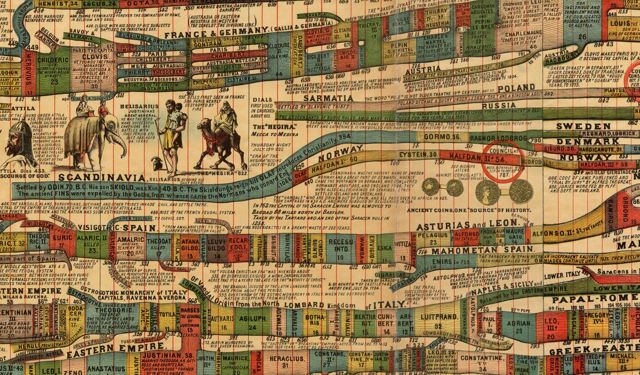
Where One Stream Ran, Now Eight
By the end of the lesson the class can find where the Western Empire’s stream ends, name the new powers that take its place, and say what the chart shows happening to the church.
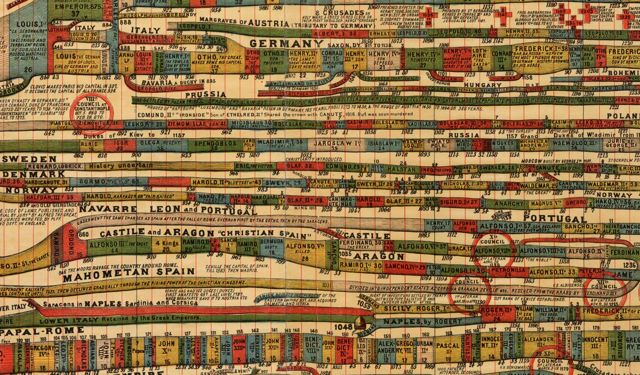
Crosses on the Shoulder, Kingdoms Below
By the end of the lesson the class can read the eight crusades from Adams’ red crosses, tell an inheritance from a revolt on the chart, and weigh the crusades against what Jesus said about his kingdom.
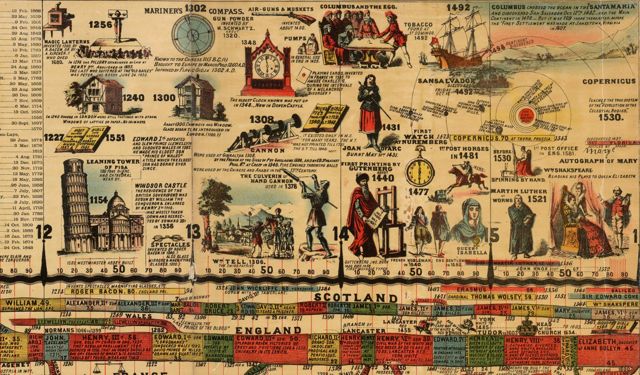
Three Yellow Books and a Press
By the end of the lesson the class can trace the Bible’s road into ordinary hands across pp. 102–103, from the open book of 1227 to the Bishops’ Bible of 1568, and say why Luther’s question mattered.
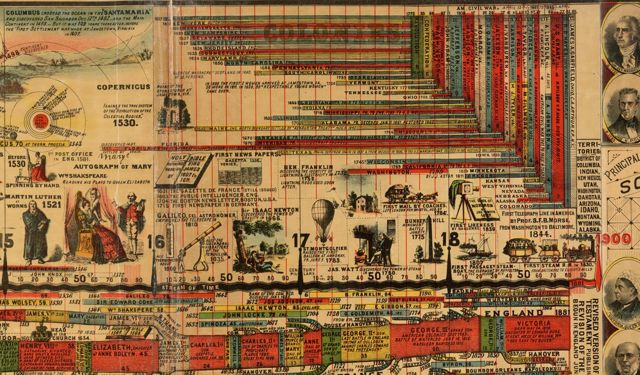
A Bible at Each End
By the end of the lesson the class can follow the colonies into states and presidents, find the place where the chart stops, and explain why Adams opens and closes this stretch with an English Bible.
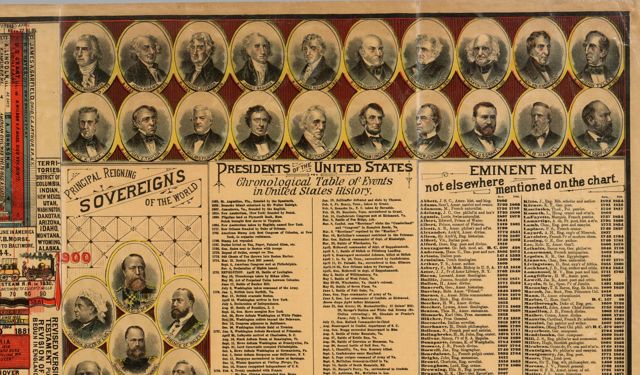
The World as It Stood in 1881
By the end of the lesson the class can read each of Adams’ four tables, explain what a missing death year means, and carry a year from the tables back to the timeline with the six keys.
Two weeks a lesson
Take a lesson across two weeks and you walk the whole chart in thirty-four, the plan printed on p. 115 of the book. One a week covers it in a little more than a quarter.
On the screen
Open the chart explorer on a projector and fly to the stretch: the whole class follows your finger, and nobody squints.
Worksheets to copy
Every lesson has a one-page worksheet in the free Companion: a timeline with Adams' dates, a matching exercise, things to find on the chart and a few lines to write.
Read the whole chart, stretch by stretch
This site lets you wander; the book walks you through. All seventeen stretches on full spreads at 75% of the real chart, numbered pins explained in order, Adams' Six Keys on every page and a study page for every stretch. Large format, full color.